
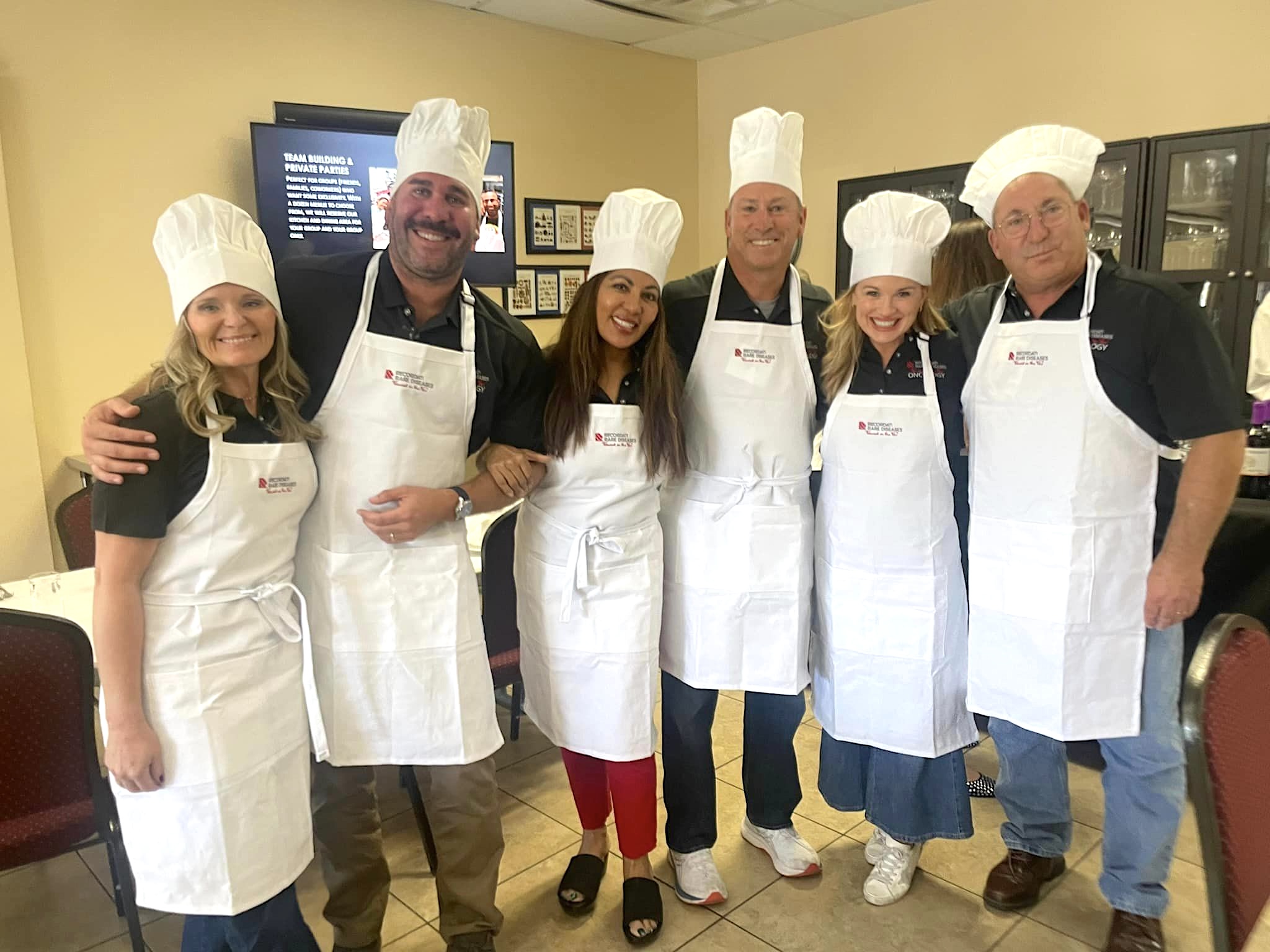
Cooking Class Team Building Events – A Delicious Spin on Corporate Outings
Corporate team-building activities are essential for strengthening relationships, fostering collaboration, and boosting morale within an organization. While traditional team-building exercises, such as trust falls or problem-solving challenges, have their place, hands-on cooking classes offer a unique and highly effective alternative. Combining creativity, teamwork, and a shared goal, cooking classes provide an engaging and memorable experience that strengthens communication, boosts employee morale, and encourages problem-solving in a relaxed and enjoyable setting. In this blog post, we’ll explore why hands-on cooking class team building events are an ideal way to foster camaraderie while still providing a fun and delicious outing!
1. Fosters Collaboration and Communication
One of the primary objectives of any team-building activity is to improve communication and collaboration among team members. In a hands-on cooking class, participants must work together to plan, prepare, and execute a meal, often in a limited time frame. This requires open communication and mutual coordination to ensure that the dishes come together successfully.
A 2020 study published in the International Journal of Hospitality Management emphasizes that shared culinary experiences help teams to develop better communication skills, especially in a relaxed, non-work-related environment (Bai, 2020). The act of cooking together encourages participants to listen actively, share ideas, and compromise on different tasks, all of which are crucial skills for effective teamwork in the workplace.
2. Encourages Problem-Solving and Creativity
Cooking classes present a series of challenges that require participants to think on their feet. Whether it’s adjusting the seasoning, fixing a misstep in a recipe, or dealing with limited resources, teams must come up with creative solutions quickly. These problem-solving opportunities directly translate to the skills needed in day-to-day office scenarios, such as overcoming obstacles and adapting to changing circumstances.
Research by Harvard Business Review (2016) suggests that creativity in team-building exercises helps employees hone their problem-solving abilities, which in turn boosts productivity and innovation in the workplace (Bohmer, 2016). The cooking environment encourages participants to think outside the box, resulting in a more creative and adaptive workforce.
3. Promotes Teamwork in a Low-Pressure Environment
Unlike more competitive or high-stress team-building activities, cooking classes create a low-pressure environment that allows employees to collaborate without the fear of failure. The goal is not to “win” but to work together and create something enjoyable. This relaxed setting can help reduce workplace stress and foster positive relationships among coworkers.
According to a study published in the Journal of Applied Behavioral Science (2019), non-competitive team-building activities like cooking classes have been found to enhance trust and camaraderie among employees (Johnson et al., 2019). By focusing on cooperation rather than competition, cooking classes allow team members to build stronger interpersonal connections, which can lead to a more harmonious workplace culture.
4. Breaks Down Hierarchical Barriers
Corporate workplaces often have a clear hierarchy that can create communication silos between employees at different levels. A cooking class, however, is an egalitarian activity where everyone participates on an equal footing. Whether you’re a CEO or an intern, you’re all involved in the same task, and the emphasis is on collective success rather than individual achievement.
A report from Deloitte (2018) highlights the importance of creating opportunities for employees at all levels to interact in non-work settings, stating that such activities can improve mutual respect and reduce hierarchical barriers (Deloitte, 2018). By working together to prepare a meal, employees are encouraged to collaborate without the constraints of office titles, which fosters a greater sense of unity within the team.
5. Boosts Employee Morale and Satisfaction
There’s no denying that food is an essential part of human connection. Sharing a meal together creates an instant sense of bonding and camaraderie. Cooking class team building events allow employees to take pride in their creations, resulting in a tangible sense of accomplishment. The enjoyment of eating the food you’ve worked together to prepare is an instant morale booster, making these events highly satisfying for all participants.
According to Gallup’s State of the American Workplace report (2017), employee engagement is significantly higher when companies provide opportunities for employees to bond outside of work tasks (Gallup, 2017). A team-building cooking class provides just that—a unique and enjoyable experience that promotes a positive and engaging work culture.
6. Promotes Health and Wellness
Incorporating health-conscious menus into cooking classes can also promote well-being among employees. As workplaces continue to recognize the importance of employee health, offering a cooking class that emphasizes healthy eating can inspire better eating habits, improve focus, and reduce stress. Cooking classes often highlight fresh, nutritious ingredients and teach participants how to create balanced meals, which can have long-lasting benefits for both personal and professional well-being.
A study in Preventative Medicine Reports (2018) found that workplace wellness programs, including cooking classes focused on healthy eating, are associated with improved employee health outcomes and reduced absenteeism (Smith et al., 2018). By combining nutrition education with team-building, cooking classes offer a holistic approach to corporate wellness.
7. Creates Lasting Memories
Finally, hands-on cooking classes provide employees with a memorable experience that will resonate long after the event is over. The shared experience of working together to create something delicious fosters positive associations and creates lasting memories that employees will associate with their company. These shared moments can be powerful conversation starters, helping to maintain camaraderie even after the event has ended.
According to Harvard Business School (2017), shared experiences are essential for creating lasting team cohesion, as they help reinforce relationships and positive group dynamics (Edmondson, 2017). Whether it’s recalling the fun moments of a particular recipe or laughing about a small mishap in the kitchen, the memories from a hands-on cooking class can strengthen team bonds in meaningful ways.
Conclusion
Incorporating a hands-on cooking class into a corporate team-building event is an excellent way to engage employees, foster collaboration, and promote creativity and problem-solving. The combination of teamwork, creativity, and shared achievement creates a unique bonding experience that can improve communication, reduce workplace stress, and build a more cohesive team. Additionally, cooking classes can promote health and wellness, which is increasingly recognized as vital for overall employee well-being. Whether your team is large or small, a cooking class can provide a fun, interactive, and valuable opportunity for growth and connection.
References:
Bai, Y. (2020). The Effect of Culinary Experiences on Team Communication and Collaboration. International Journal of Hospitality Management, 41, 120-130.
Bohmer, R. M. (2016). How Creative Problem-Solving Boosts Team Performance. Harvard Business Review.
Johnson, M. et al. (2019). Non-Competitive Team Building: Building Trust Through Collaborative Experiences. Journal of Applied Behavioral Science, 55(4), 480-496.
Deloitte. (2018). The Importance of Cross-Hierarchical Interactions in Team-Building Activities. Deloitte Insights.
Gallup. (2017). State of the American Workplace. Gallup.
Smith, L. et al. (2018). Workplace Wellness Programs and Employee Health Outcomes. Preventative Medicine Reports, 10, 44-51.
Edmondson, A. (2017). The Power of Shared Experiences in Team Building. Harvard Business School.
Links:
For more information on our corporate team building classes, click here!
To see how prior team building events at Classic Cooking looked like, click here!
To view our other blog posts, click here!